What do client onboarding and kittens have in common?
More than you'd think.
I know, that's a sentence I never thought I'd write either, but hear me out.
I've fostered a handful of litters over the last couple of years. Nothing that qualifies me as an expert. Just enough experience to have picked up a system, learned what works, and developed strong opinions about the correct way to introduce a nervous kitten to a new environment (preferably softly, and with snacks).
Recently, I was prepping the apartment for a new litter around the same time I was onboarding a new client at EleVault. I was toggling between two mental checklists, and somewhere in the middle of it, I realized the two processes had way more in common than they should.
Which, of course, immediately felt like a blog post.
So here we are. What my foster kittens have taught me about onboarding new clients, from someone who is a real marketer and, on occasion, a very temporary cat mom.

The First 48 Hours Set Everything
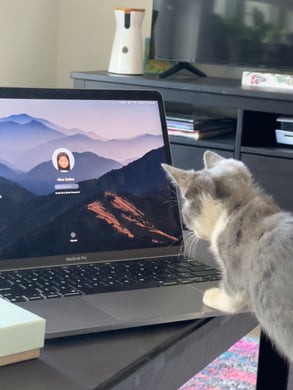
When a new foster arrives, the first 48 hours matter more than the next three weeks combined.
They're disoriented. They've been moved from one place to another. They don't know if this environment is safe, if I'm safe, or what's about to happen to them. Every sound is louder than it needs to be. Every movement I make is being watched.
So I go slow. I give them a small, quiet space. I don't force interaction. I let them come to me. I make sure the essentials are there (food, water, litter, warmth) and I make sure they know where those things are.
And guess what?
A new client shows up the exact same way.
They've just made a decision, spent money, and handed over a piece of their business to a stranger. They're nervous. They're second-guessing. They're wondering if they made the right call.
The first 48 hours are your best chance to prove they did. That doesn't happen with an overwhelming welcome packet, seven attachments, and a project plan the size of a novel. It happens with clear, calm, human communication that says: you're in good hands, here's what happens next, here's how to reach us, we've got you.
Give them the essentials. Show them where things are. Let them settle in.
Every Client Has a Different Personality
I've fostered kittens who bounded out of the carrier ready to make friends with everyone in the house within an hour.
I've fostered kittens who spent three full days hiding under the bed and hissing at the sight of my hand.
Both are normal. Both need something different.
The confident ones need boundaries. The nervous ones need patience. The rambunctious ones need play. The quiet ones need low-key company. You can't run the same playbook on every kitten and expect it to work.
Clients are exactly the same way. Same industry. Same package. Completely different personalities. Completely different needs.
Some clients want a weekly call and a color-coded project doc. Some want a monthly check-in and to be left alone in between. Some are natural communicators who will text you at 9pm with an idea they had in the shower. Some will disappear for weeks and then reappear expecting you to have moved mountains in their absence.
The onboarding process needs enough structure to feel professional and enough flexibility to meet each client where they are. If your process treats every client like the same kitten, you're going to lose the ones who needed something different.
Trust Is Built in Small, Consistent Moments
Kittens don't decide they trust you all at once. They decide it in a thousand tiny moments.
You showed up on time with the food. You didn't chase them when they hid. You spoke softly. You let them sniff your hand before you moved it. You noticed when they were finally ready to be picked up, and you did it gently.
None of those moments feel like a big deal in isolation. But together? They add up to a small creature that eventually falls asleep on your chest and lets you hold them like a tiny, purring loaf of bread.

Client trust is built the same way. In a thousand tiny moments where you did what you said you would.
You responded when you said you'd respond. You delivered when you said you'd deliver. You caught the small thing before it became a big thing. You noticed when they were stressed and reached out first. You said "I don't know, but I'll find out" instead of pretending.
None of those moments feel like a big deal on their own. But over time, they build the kind of relationship where clients don't just tolerate you, they trust you enough to hand you more work and refer you to everyone they know.
The Handoff Matters
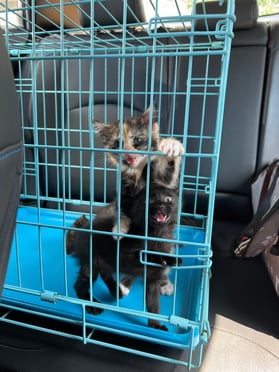
Every foster experience ends with a handoff. The kittens either go to a permanent home or back to their full-time foster, and my job is to make sure they're set up to thrive.
For new homes I write up notes on their personality, their favorite toys, their food schedule, their quirks. I let the new family know what to expect in the first week. I send the food and litter they're used to so nothing changes all at once.
I want the transition to be smooth. I want the next chapter to work. I don't stop caring about the kitten when they leave my house.

Client "handoffs" work the exact same way.
Whether it's finishing a project, transitioning a client to a different team member, or wrapping up a retainer, how you exit matters as much as how you entered. The client should walk away feeling supported, informed, and set up to keep the momentum going.
The best onboarding processes are built with the eventual handoff in mind. Documentation lives somewhere accessible. Assets are organized. Nothing is trapped in one person's inbox. The client can pick up any part of the work and understand what's happening.
That's not just good client service. That's how you get referrals, testimonials, and repeat business years later.
The Real Lesson
Here's what the crossover really comes down to:
Onboarding, at its best, isn't a process. It's a posture. It's showing up with patience, attention, and the willingness to meet each new relationship where it actually is, not where your template says it should be.
The businesses (and fosters) that get this right build trust that lasts far beyond the initial onboarding window.
The ones that don't spend their careers wondering why clients keep churning, why referrals aren't happening, why the next relationship is somehow harder than the last.
Slow down. Pay attention. Meet each new arrival with the same care you'd give a small, nervous creature who just showed up on your doorstep hoping this is going to be a good place to land.
Because in a way, that's exactly what your clients are doing too.
Until next time, Nina
Currently reading: Verity by Colleen Hoover (finishing this weekend, I swear)
Currently listening to: my usual Spotify daylist ☀️
Currently sipping: also my usual brown sugar shaken espresso dupe